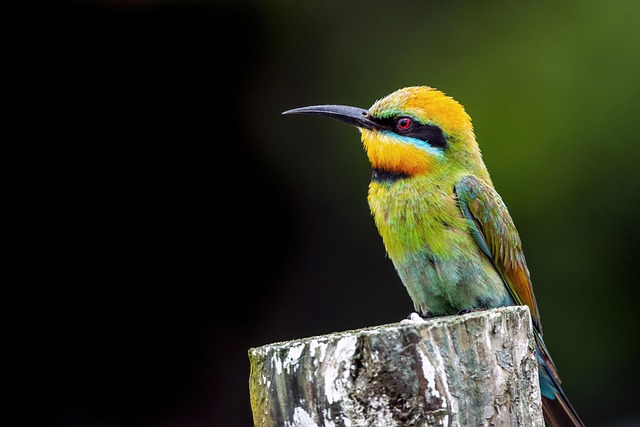
Rainbow Bee-eater: The Flying Jewel of the Skies
The Rainbow Bee-eater is one of the most dazzling birds you’ll ever see, flashing brilliant shades of green, blue, gold, and chestnut as it slices through the air. Native to Australia and parts of Southeast Asia, this slender, elegant bird is famous for its aerial hunting skills and cheerful calls. With its long tail streamers and curved bill, the Rainbow Bee-eater looks like a living gemstone in motion—beautiful, fast, and highly intelligent.
Fun Facts: Nature’s Colorful Acrobat
- Bee Experts: Before eating a bee or wasp, they skillfully remove the stinger by rubbing the insect against a branch.
- Aerial Hunters: They catch most of their prey mid-air with incredible precision.
- Tail Streamers: Adults grow long tail feathers during breeding season, making them even more striking.
- Sun Lovers: Rainbow Bee-eaters often perch facing the sun to warm up and spot flying insects more easily.
- Team Parents: Both males and females, and sometimes helpers, assist in raising the chicks.
Scientific Information: Built for Speed & Precision
- Scientific Name: Merops ornatus
- Family: Meropidae (Bee-eaters)
- Average Length: 19–24 cm (including tail streamers)
- Wingspan: Around 30–33 cm
- Diet: Bees, wasps, dragonflies, butterflies, and other flying insects
Special Adaptations:
- A slender, curved bill perfect for catching and handling insects.
- Sharp eyesight to detect tiny insects while flying at speed.
- Lightweight bodies and long wings allow for agile, acrobatic flight.
Habits & Behavior: Life in Motion
- Burrow Nesters: Unlike most birds, Rainbow Bee-eaters dig long tunnels into sandy banks or flat ground to lay their eggs.
- Seasonal Travelers: In southern Australia, they migrate north during colder months.
- Social Birds: Often seen in small flocks, especially outside the breeding season.
- Distinct Calls: Their soft, rolling “prreep” calls help keep contact with flock members.
- Patient Hunters: They may wait quietly on a perch before launching into the air for a swift, precise catch.