Red-Crowned Crane – The Majestic Dancer of Snowy Wetlands
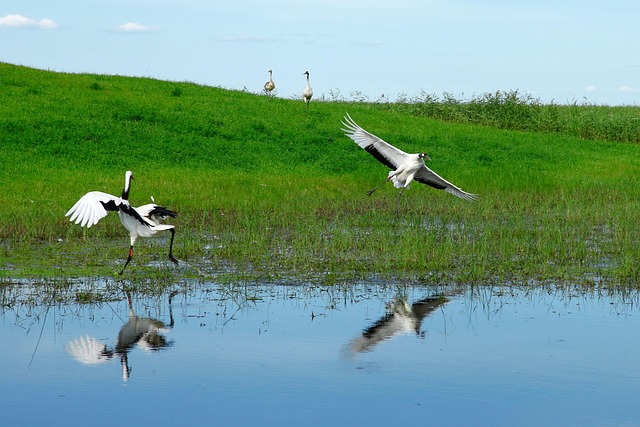
Elegant, graceful, and deeply symbolic, the Red-Crowned Crane is one of the most striking birds on Earth. With its snow-white body, contrasting black accents, and vivid red crown, this magnificent crane has inspired art, folklore, and admiration for centuries. Often associated with peace, longevity, and fidelity, the bird embodies both beauty and mystery in the natural world.
The Red-Crowned Crane holds special cultural significance in Japan, where it is revered as a symbol of luck, longevity, and happiness. While not officially designated as a national bird, it is widely regarded as one of the country’s most iconic and cherished wildlife species.
Fun Facts
• Symbol of Longevity – In East Asian folklore, Red-Crowned Cranes are believed to live for a thousand years.
• Elegant Courtship Dances – These cranes perform elaborate, synchronized dances involving bows, leaps, and wing displays.
• Impressive Wingspan – Their wingspan can exceed 2.4 meters (about 8 feet).
• Rare & Protected – They are among the world’s most endangered crane species.
• Lifelong Bonds – Pairs often remain together for life, strengthening their bond through ritualized displays.
Scientific Info
Common Name: Red-Crowned Crane
Scientific Name: Grus japonensis
Family: Gruidae
Height: 150–158 cm (approx.)
Wingspan: Up to 240 cm
Weight: 7–10.5 kg
Habitat:
Red-Crowned Cranes inhabit wetlands, marshes, river basins, and coastal tidal flats. They prefer open, undisturbed landscapes with shallow water.
Distribution:
Found primarily in East Asia, including parts of China, Russia, Korea, and Japan. Some populations are migratory, while others remain resident year-round.
Conservation Status:
Classified as Endangered due to habitat loss, human disturbance, and environmental changes.
Habits & Behavior
Graceful Movers
Despite their large size, Red-Crowned Cranes move with remarkable elegance. Their slow, deliberate steps and poised posture make them appear almost ceremonial.
Vocal Communication
These cranes are highly vocal, producing loud, trumpeting calls that can travel long distances. Paired cranes often perform “duets,” reinforcing pair bonds and territory claims.
Diet & Feeding
They are omnivorous and feed on aquatic plants, insects, fish, amphibians, and small invertebrates. Wetlands provide both food and safety.
Social Structure
Outside the breeding season, cranes may gather in flocks. During breeding, however, pairs become territorial and protective of nesting areas.
Courtship & Pair Bonding
Their famous dances are not just displays of beauty but vital communication rituals. Dancing helps establish and maintain pair relationships.
A Bird of Beauty and Meaning
Few birds combine physical elegance with cultural importance as powerfully as the Red-Crowned Crane. Whether gliding over misty marshes or performing intricate dances, it represents harmony between nature and symbolism — a true masterpiece of the avian world.