Rhinoceros – The Armored Giant of the Wild
The Rhinoceros, often called the “Rhino,” is one of the most powerful and ancient-looking mammals on Earth. With its thick, armor-like skin and impressive horn, the rhinoceros symbolizes strength, endurance, and survival. Roaming the grasslands, forests, and wetlands of Africa and Asia, this magnificent animal has existed for millions of years, standing today as a living link to the prehistoric past.
Fun Facts
- Rhinoceroses have poor eyesight but an excellent sense of smell and hearing.
- A rhino’s skin can be up to 5 cm thick, yet it is surprisingly sensitive.
- Despite their heavy size, rhinos can run up to 50–55 km/h over short distances.
- The horn of a rhinoceros is made of keratin, the same material as human hair and nails.
- Rhinos love mud baths, which help cool their bodies and protect their skin from insects.
Scientific Information
- Common Name: Rhinoceros
- Scientific Family: Rhinocerotidae
- Class: Mammalia
- Order: Perissodactyla
- Species: Five species (White, Black, Indian, Javan, Sumatran)
- Average Weight: 800–2,500 kg (species-dependent)
- Average Lifespan: 35–50 years
There are two species in Africa and three species in Asia, each adapted to different habitats and climates.
Habits & Behavior
Rhinoceroses are generally solitary animals, though some species may be seen in pairs or small groups. They are mostly active during the early morning and late afternoon, resting in shaded areas during hot daytime hours.
- Diet: Herbivorous—grasses, leaves, shoots, fruits, and branches
- Temperament: Usually calm but can be aggressive when threatened
- Territory: Marked using dung piles and scent
- Defense: Powerful charge and horn display
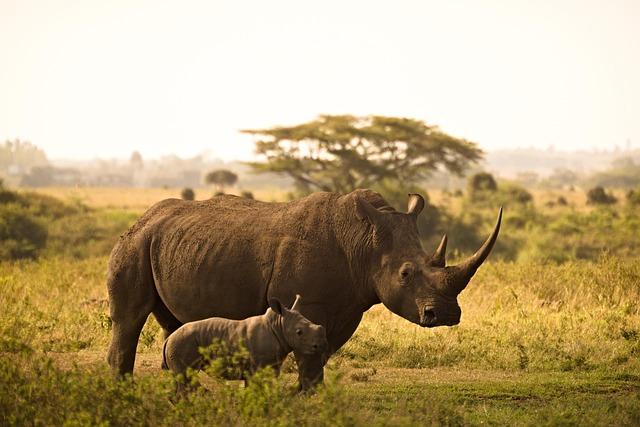
Mother rhinos are highly protective and stay close to their calves for several years, ensuring safety and proper learning.
Rhinoceros as a National Animal
The Indian Rhinoceros (Greater One-Horned Rhino) is the national animal of Nepal. It represents pride, resilience, and successful wildlife conservation, as Nepal has become a global example in protecting this endangered species.