Shoebill: The Prehistoric-Looking Giant of the African Wetlands
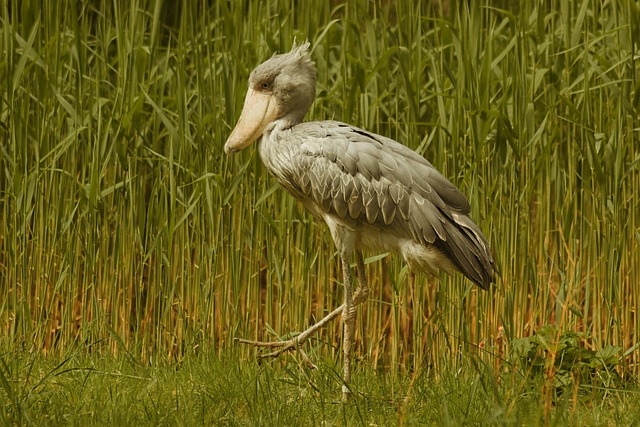
The Shoebill is one of the most fascinating and mysterious birds on Earth. Known for its massive, shoe-shaped bill and intense, almost intimidating stare, this rare bird looks like it stepped straight out of the prehistoric era. Found mainly in the swamps of central tropical Africa, the Shoebill is a master of patience and precision, standing still for hours before striking its prey with incredible speed. Its unique appearance and behavior have made it one of the most sought-after birds for wildlife enthusiasts and photographers around the world.
Fun Facts
- The Shoebill’s beak can grow up to 24 cm (9.4 inches) long!
- It is often called the “dinosaur bird” because of its ancient look.
- Shoebills can stand completely still for long periods, like statues.
- Their main diet includes lungfish, which can survive in low-oxygen water.
- Shoebills perform a unique behavior called “bill clattering”, especially during greetings.
- Despite their size, they are surprisingly quiet and solitary birds.
- They can fly, but prefer to walk slowly through marshes.
Scientific Information
- Scientific Name: Balaeniceps rex
- Common Name: Shoebill
- Kingdom: Animalia
- Phylum: Chordata
- Class: Aves
- Order: Pelecaniformes
- Family: Balaenicipitidae
- Height: 110–140 cm (3.6–4.6 ft)
- Wingspan: 230–260 cm (7.5–8.5 ft)
- Weight: 4–7 kg
Habits & Behavior
Shoebills are known for their calm and patient hunting style. They prefer to live in dense freshwater swamps, marshes, and wetlands, where food is abundant and disturbance is minimal.
Unlike many birds, Shoebills hunt alone. They stand motionless for long periods, carefully watching the water. When they spot prey, they strike suddenly with their powerful beak, often catching fish, frogs, or even small reptiles in a single swift movement.
These birds are generally solitary and territorial, only coming together during the breeding season. They build large nests on floating vegetation and usually lay 1–3 eggs. Interestingly, if multiple chicks hatch, the strongest one often survives, as competition for food is intense.
Shoebills are also known for their slow and deliberate movements, adding to their mysterious and almost eerie presence. Their piercing gaze and silent behavior make them one of the most unique birds in the world.