Shoveler Bird: The Wide-Billed Duck Built for Nature’s Perfect Filter
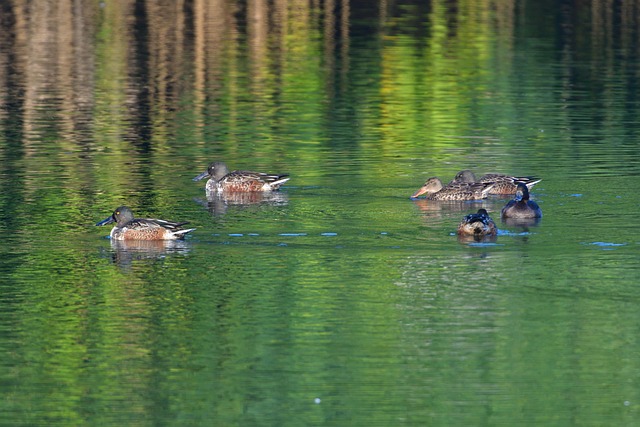
The Shoveler is one of the most recognizable ducks in the world, famous for its unusually large, spoon-shaped bill. This remarkable adaptation allows it to filter tiny aquatic plants, seeds, insects, and small crustaceans from the water with incredible efficiency. Found across wetlands, lakes, marshes, and shallow ponds on several continents, shovelers are graceful swimmers and long-distance migrants that play an important role in freshwater ecosystems.
The most well-known species, the Northern Shoveler (Spatula clypeata), is admired for its colorful breeding plumage, calm behavior, and unique feeding style. Whether gliding across a peaceful marsh or feeding in a group, the shoveler is a fascinating bird that showcases the beauty and ingenuity of nature.
Fun Facts
- The shoveler’s broad, flattened bill contains hundreds of tiny comb-like structures called lamellae, which work like a natural sieve.
- It often swims in circles with other ducks to create a whirlpool that brings food to the surface.
- Male Northern Shovelers display a brilliant green head, white chest, and rich chestnut-colored sides during the breeding season.
- Females have mottled brown feathers that provide excellent camouflage while nesting.
- Shovelers are capable of flying long distances during seasonal migrations.
- Their oversized bill is one of the largest, relative to body size, among all duck species.
- They feed on both plant material and small aquatic animals, making them adaptable omnivores.
- Chicks leave the nest within a day after hatching and begin feeding themselves under their mother’s protection.
Scientific Information
Common Name: Shoveler
Most Common Species: Northern Shoveler
Scientific Name: Spatula clypeata
Family: Anatidae
Order: Anseriformes
Class: Aves
Diet: Omnivore
Length: 44–52 cm (17–20 inches)
Wingspan: 70–84 cm (28–33 inches)
Weight: 400–1,100 g (0.9–2.4 lb)
Lifespan: Typically 10–15 years in the wild
Habitat: Marshes, wetlands, shallow lakes, ponds, flooded grasslands, and estuaries
Distribution: Europe, Asia, North America, and parts of Africa during migration and winter
Conservation Status: Least Concern (IUCN)
Habits & Behavior
Shovelers are social waterfowl that are often seen feeding in small flocks. Their most distinctive behavior is surface filtering, where they sweep their wide bills from side to side through shallow water, trapping tiny organisms and plant material while allowing water to drain away.
These ducks are excellent swimmers and strong fliers. During migration, they travel thousands of kilometers between breeding and wintering grounds, often flying at night in organized flocks.
The breeding season begins in spring when males perform courtship displays that include head-bobbing, wing-fluttering, and soft vocalizations to attract females. Nests are usually hidden among tall grasses close to water. Females lay around 8–12 eggs and incubate them for about three to four weeks, while males leave after incubation begins.
Shovelers are generally peaceful birds but may defend feeding areas from rivals. Their cryptic plumage outside the breeding season helps protect them from predators such as foxes, raccoons, birds of prey, and large fish that prey on ducklings.
By feeding on aquatic invertebrates and plant matter, shovelers help maintain healthy wetland ecosystems and contribute to the natural balance of freshwater habitats. Their remarkable filtering bill makes them one of the most specialized and fascinating ducks in the world.