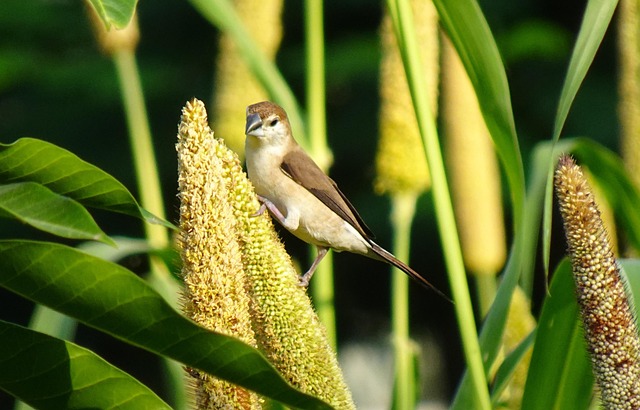
Silverbill Bird: Tiny Seed-Eater with a Gentle Nature & Charming Calls
The Silverbill is a small, sociable finch admired for its soft plumage, silvery-blue bill, and cheerful personality. Belonging to the family Estrildidae, silverbills are native to Africa and the Indian subcontinent, where they thrive in grasslands, scrublands, farmland, gardens, and open woodlands. Their gentle calls, active behavior, and ability to live close to humans make them a favorite among birdwatchers and aviculture enthusiasts.
The most familiar species is the Indian Silverbill (Euodice malabarica), also known as the White-throated Munia in some older references. These tiny birds are often seen in pairs or small flocks, busily searching for seeds on the ground or among tall grasses. Their calm temperament and attractive appearance make them one of the most charming members of the waxbill family.
Although modest in size, silverbills play an important ecological role by helping disperse grass seeds and serving as prey for larger wildlife, contributing to the balance of natural ecosystems.
Fun Facts
- Silverbills feed mainly on grass seeds and are excellent seed gatherers.
- They are highly social birds and are usually seen in pairs or small flocks.
- Their pale, silvery-blue bill gives them their common name.
- Silverbills build neat, dome-shaped nests using grasses and fine plant fibers.
- Both the male and female share the duties of incubating eggs and feeding their chicks.
- The Indian Silverbill is widely distributed across the Indian subcontinent and parts of the Middle East.
- Their soft, gentle chirps help flock members stay in contact while foraging.
- Silverbills adapt well to farmland, parks, gardens, and dry open habitats.
Scientific Information
Common Name: Silverbill
Representative Species: Euodice malabarica (Indian Silverbill)
Family: Estrildidae
Order: Passeriformes
Class: Aves
Diet: Primarily granivorous (grass seeds, grains, small seeds), with occasional insects during the breeding season.
Average Length: 11–12 cm (4.3–4.7 inches)
Wingspan: 16–18 cm (6.3–7.1 inches)
Weight: 10–15 grams
Lifespan: Typically 5–8 years in the wild; may live longer in captivity.
Habitat: Grasslands, scrublands, open woodlands, farmland, agricultural fields, gardens, and urban parks.
Distribution: Indian subcontinent, the Middle East, and parts of Africa (depending on the species).
Migration: Generally non-migratory (resident).
Conservation Status: Least Concern (IUCN) for the Indian Silverbill.
Habits & Behavior
Silverbills are peaceful and highly social birds that spend much of their day foraging for seeds on the ground or among tall grasses. Their small, cone-shaped bills are perfectly adapted for cracking tiny seeds, making grasses and cultivated fields ideal feeding areas.
These birds usually live in pairs or small flocks and maintain close contact through soft chirping calls. During the breeding season, bonded pairs work together to construct compact, dome-shaped nests hidden within shrubs, thorny bushes, or dense vegetation. Both parents share the responsibilities of incubating the eggs and caring for the young.
Silverbills are active during daylight hours and are agile fliers, often moving quickly between feeding sites and nearby perches. They are generally calm and tolerant of human activity, allowing them to thrive in villages, farms, gardens, and city parks.
Their gentle nature, attractive appearance, and pleasant calls make silverbills popular among bird enthusiasts, while their seed-eating habits contribute to the natural balance of grassland ecosystems. Protecting open habitats and native vegetation helps ensure healthy populations of these delightful little birds for generations to come.