Siskin: The Tiny Finch with a Bright, Cheerful Song
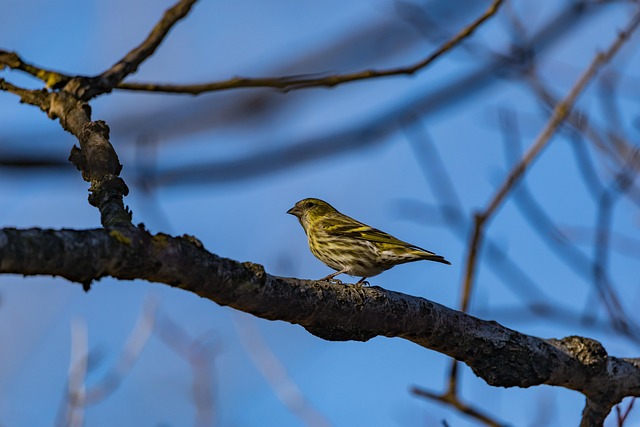
The Siskin is a small, lively finch admired for its colorful plumage, energetic movements, and cheerful, twittering voice. Siskins are members of the finch family Fringillidae and are found across different parts of the Northern Hemisphere. Several species are commonly known as siskins, with many belonging to the genus Spinus.
These delightful birds are often associated with woodlands, especially areas containing coniferous trees, birches, and other seed-producing plants. Their small, pointed bills are well adapted for extracting seeds, while their agile feet allow them to move easily among thin branches.
Siskins are highly social outside the breeding season and may gather in flocks while searching for food. Their rapid movements and distinctive calls make them enjoyable birds to watch and listen to. Whether feeding high in the treetops or visiting a bird feeder, siskins bring plenty of energy and charm to their surroundings.
Fun Facts
- Small and agile: Siskins are tiny finches capable of moving quickly through branches and foliage.
- Forest-loving birds: Many siskin species are strongly associated with coniferous and mixed woodlands.
- Seed specialists: Their pointed bills are excellent for extracting and eating small seeds.
- Acrobatic feeders: Siskins can hang from branches and sometimes feed while positioned upside down.
- Highly social: Many siskins form flocks, particularly outside the breeding season.
- Musical voices: Siskins produce lively, high-pitched calls and rapid twittering songs.
- Seasonal movements: Some siskin species and populations move considerable distances depending on food availability and weather.
- Excellent climbers: Their strong feet help them grip small branches while feeding.
- Careful nest builders: Siskins generally build well-hidden nests in trees or dense vegetation.
Scientific Information
Common Name: Siskin
Family: Fringillidae
Order: Passeriformes
Type: Finch / Songbird
Genus: Several genera are represented among birds commonly called siskins, including Spinus
Diet: Primarily seeds, buds, and other plant material; some species also consume small insects and invertebrates
Habitat: Coniferous forests, mixed woodlands, forest edges, shrublands, parks, and gardens
Distribution: Various regions of Europe, Asia, and North America, depending on the species
Siskins belong to the diverse finch family Fringillidae, which contains many seed-eating songbirds. Although the name “Siskin” is used for several different species, these birds generally share adaptations suited to feeding on seeds and living in woodland environments.
Their compact bodies, strong feet, and specialized bills allow them to exploit food sources that can be difficult for many other small birds to reach. Plumage varies between species, but many siskins display attractive combinations of green, yellow, brown, black, and streaked markings.
Habits & Behavior
Feeding Behavior
Siskins spend much of their time searching for seeds in trees and shrubs. Depending on the species and habitat, they may feed on seeds from conifers, birches, alders, grasses, and other plants.
Their agile feeding technique allows them to reach seeds among cones and small branches. They may also visit gardens and bird feeders when suitable food is available.
Social Behavior
Siskins are generally sociable birds. Outside the breeding season, they often gather in groups or mixed-species flocks while searching for food.
Flocks can be quite active and noisy, with individuals constantly calling to one another as they move between feeding locations.
Breeding Behavior
During the breeding season, siskins typically become more territorial and focus on finding suitable nesting locations. Depending on the species, nests may be placed in trees, shrubs, or other concealed locations.
The female generally builds the nest and lays a clutch of eggs. Both parents may participate in caring for the young, providing food until the chicks are strong enough to leave the nest and become independent.
Movement & Migration
Siskin movements vary considerably between species and populations. Some populations are relatively sedentary, while others undertake seasonal migrations.
Food availability plays an important role in their movements. When natural seed supplies change, siskins may travel to areas where food is more abundant. This can sometimes result in large numbers appearing in places where they are not normally common.
Vocal Behavior
One of the most appealing features of siskins is their lively vocalization. Their calls and songs often consist of rapid, high-pitched notes, twittering sounds, and short musical phrases.
Siskins use vocalizations to communicate with flock members, attract mates, establish territories, and maintain contact while moving through vegetation.
Adaptation to Their Environment
Siskins are well adapted to life among trees and shrubs. Their small size allows them to move through narrow branches, while their strong feet provide a secure grip. Their specialized bills help them obtain seeds from a variety of plants.
Their combination of agility, social behavior, specialized feeding adaptations, and distinctive vocalizations makes siskins fascinating members of the finch family. Whether you encounter one in a forest, hear its cheerful calls from the treetops, or watch a flock gathering around a feeder, a siskin is always a delightful sight and sound in nature.