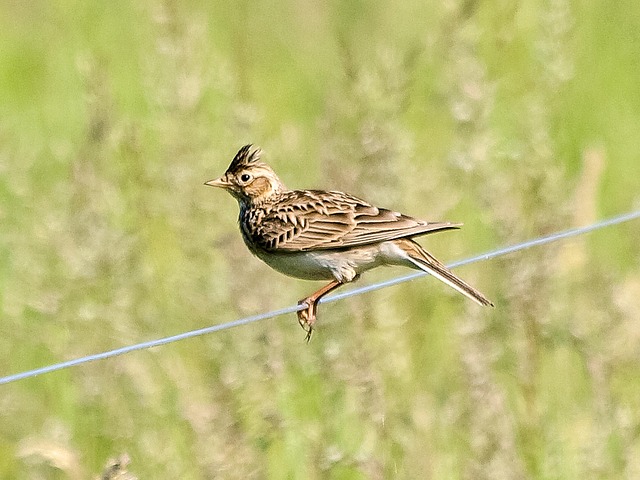
Skylark: The Singing Jewel of Open Fields and Skies
The Skylark is a small, enchanting songbird celebrated for its beautiful, continuous song that often fills open skies and wide grasslands. Found across Europe, Asia, and parts of North Africa, the skylark is best known for its unique behavior of singing while soaring high above the ground. This remarkable bird spends much of its life in open fields, farmlands, meadows, and heathlands, where its brown, streaked plumage helps it blend perfectly with the ground. Despite its modest appearance, the skylark is one of the most admired birds in literature, poetry, and music due to its uplifting and melodious song.
Fun Facts
- Skylarks are famous for singing continuously while flying high in the sky.
- Their song can last for several minutes without interruption.
- They often sing even while hovering almost motionless in the air.
- Skylarks build their nests directly on the ground, hidden among grass.
- Their camouflage is so effective that they are very difficult to spot.
- They are often considered symbols of hope and freedom in poetry.
- A skylark can sing over 300 different song variations.
- They rise vertically into the air when singing and slowly descend afterward.
Scientific Information
Common Name: Skylark
Scientific Name: Alauda arvensis
Order: Passeriformes
Family: Alaudidae
Class: Aves
Diet: Omnivorous (seeds, grains, insects, small invertebrates)
Average Length: 16–18 cm (6–7 inches)
Average Weight: 25–45 grams
Wingspan: 30–36 cm
Lifespan: 2–5 years in the wild
Habitat: Grasslands, farmland, meadows, open fields, heathlands
Distribution: Europe, Asia, and North Africa (introduced in some regions)
Habits & Behavior
Skylarks are ground-dwelling birds that prefer open landscapes where they can forage and nest safely. They spend most of their time on the ground searching for seeds and insects. Their nests are shallow depressions hidden in grass, making them well-protected from predators and human disturbance.
One of the skylark’s most distinctive behaviors is its spectacular song flight. The male rises high into the sky while singing continuously, often becoming almost invisible against the sky. This aerial display serves both to attract mates and to defend territory.
Skylarks are generally solitary or found in pairs during the breeding season, but they may form small flocks outside the breeding period. They are highly alert and rely on their camouflage rather than flight to avoid danger, often staying motionless when threatened.
During colder months, skylarks may migrate or move to warmer regions depending on their habitat. Their adaptability and remarkable singing ability make them one of the most beloved songbirds of open countryside landscapes.