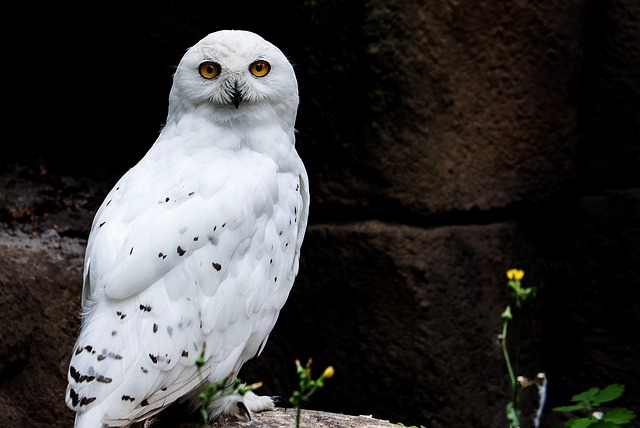
Snowy Owl: The Majestic Ghost of the Arctic
The Snowy Owl is one of the most striking and iconic birds of the Arctic tundra. With its brilliant white plumage and piercing yellow eyes, it looks almost magical against the icy landscapes it calls home. Unlike many other owls, the Snowy Owl is active during the day, making it easier to observe in the wild. This powerful predator has adapted perfectly to survive in some of the harshest conditions on Earth, symbolizing resilience, beauty, and mystery.
Fun Facts
- Snowy Owls are sometimes called the “Arctic Ghost” due to their white feathers and silent flight.
- They became globally famous through the character Hedwig in the Harry Potter series.
- Unlike most owls, they hunt both during the day and night (diurnal behavior).
- Female Snowy Owls have more black markings than males, helping to distinguish them.
- They can rotate their heads up to 270 degrees to spot prey.
- Snowy Owls do not build traditional nests—they often use simple scrapes on the ground.
- In years when food is scarce, they migrate far south, sometimes appearing in unusual locations.
Scientific Information
- Common Name: Snowy Owl
- Scientific Name: Bubo scandiacus
- Family: Strigidae
- Order: Strigiformes
- Habitat: Arctic tundra, open plains, coastal dunes
- Diet: Primarily lemmings, also birds and small mammals
- Lifespan: Around 9–10 years in the wild
- Wingspan: 125–150 cm (49–59 inches)
- Weight: 1.6–3 kg
Habits & Behavior
Snowy Owls are highly adapted to cold environments. Their thick feathers cover even their legs and feet, providing insulation against freezing temperatures. They are powerful hunters, relying on keen eyesight and hearing to locate prey, often from a perch or while flying low over the ground.
Unlike forest-dwelling owls, Snowy Owls prefer open landscapes where they can easily spot movement. They are known for their patience—sometimes waiting for hours before striking prey with precision.
During breeding season, males perform aerial displays to attract females, while females fiercely guard their nests. These owls are generally solitary, but their movements depend heavily on prey availability. When lemming populations drop, Snowy Owls may travel long distances in search of food, a phenomenon known as “irruption.”