Melodies in the Meadow: Discovering the Charm of the Song Sparrow
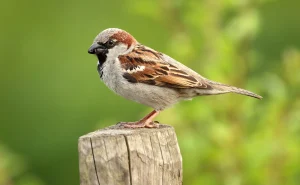
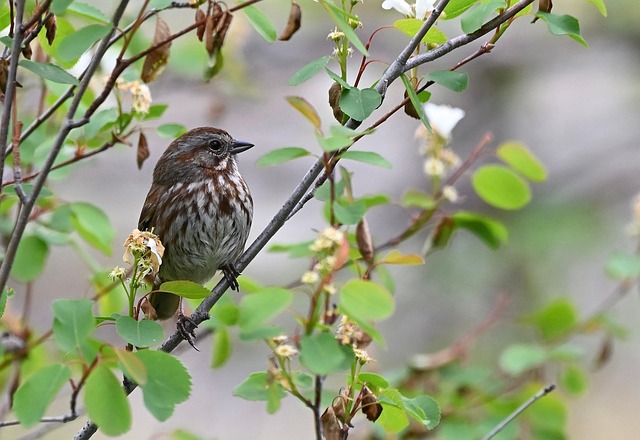
The Song Sparrow (Melospiza melodia) is one of nature’s most delightful little musicians. Found across much of North America, this modest-looking bird fills fields, marshes, and backyards with its rich and varied songs. Despite its subtle brown plumage, the Song Sparrow stands out through its expressive voice and adaptable nature, making it a favorite among birdwatchers and nature lovers alike.
Fun Facts
- Unique Singers: Each male Song Sparrow can have a repertoire of up to 20 different song variations.
- Wide Distribution: They are one of the most widespread sparrows in North America.
- Spot the Spot: Their streaked chest often forms a central dark spot—like a signature marking.
- Backyard Friendly: Song Sparrows frequently visit gardens, especially where shrubs and water are available.
- Year-Round Residents: Some populations migrate, while others stay in the same area throughout the year.
Scientific Information
- Scientific Name: Melospiza melodia
- Family: Passerellidae
- Order: Passeriformes
- Class: Aves
- Average Length: 11–18 cm (4.3–7.1 inches)
- Wingspan: 18–25 cm
- Weight: 12–53 grams
- Lifespan: Typically 3–5 years in the wild
Habits & Behavior
Song Sparrows are highly adaptable birds that thrive in a variety of habitats, including wetlands, grasslands, forests, and urban gardens. They are often seen perched on low branches or shrubs, singing loudly to mark their territory.
These birds are ground foragers, feeding mainly on seeds, insects, and small invertebrates. During the breeding season, insects become especially important for feeding their young.
Male Song Sparrows are particularly vocal, using their complex songs to attract mates and defend territory. Their songs usually begin with a few clear notes followed by a rapid trill, creating a musical and recognizable pattern.
They are generally solitary or found in pairs during breeding season but may form loose flocks in winter. Their nests are carefully built close to the ground, hidden among dense vegetation to protect against predators.