Sparrowhawk — The Lightning-Fast Master of Surprise
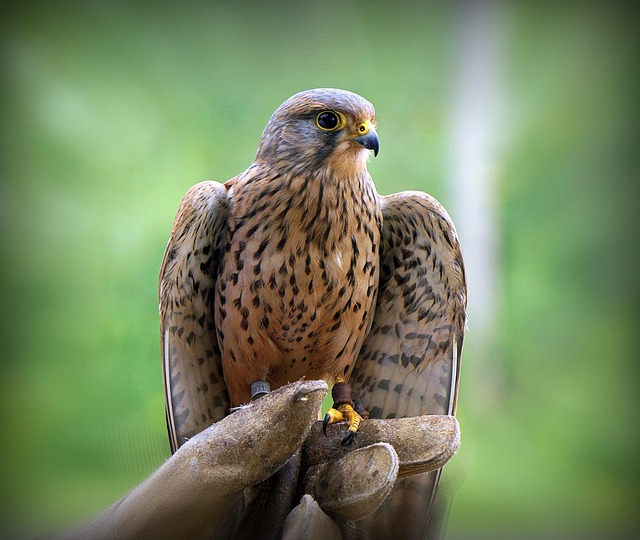
The Sparrowhawk, commonly known as the Eurasian Sparrowhawk (Accipiter nisus), is a small but remarkably powerful bird of prey belonging to the hawk and eagle family, Accipitridae. It is a specialist hunter of smaller birds and is famous for its incredible speed, agility, and ability to maneuver through dense vegetation and woodland.
With its long tail, relatively short rounded wings, sharp talons, and striking yellow eyes, the Sparrowhawk is beautifully adapted for hunting in confined spaces. Rather than soaring high above the landscape like many larger raptors, it often stays close to trees, hedges, buildings, and other cover, using surprise to approach its prey.
The species has also adapted remarkably well to human environments. Sparrowhawks can now be found not only in forests and farmland but also in parks, gardens, and urban green spaces, where bird feeders can unintentionally create attractive hunting opportunities.
Fun Facts
- A master of surprise: Sparrowhawks often use trees, hedges, and buildings as cover before suddenly bursting out to catch prey.
- Females are much larger: As in many birds of prey, female Sparrowhawks are considerably larger than males. This difference is known as sexual size dimorphism.
- Striking yellow eyes: Adults have distinctive yellow or orange-yellow eyes, complemented by long, slender yellow legs and sharp talons.
- Small-bird specialist: Their diet consists primarily of other birds, making them highly specialized aerial and woodland hunters.
- City survivors: Although traditionally associated with woodland, Sparrowhawks have successfully adapted to urban gardens and other green spaces.
- Recognizable flight: Their flight often consists of several rapid wingbeats followed by a short glide—a characteristic “flap-flap-glide” pattern.
- Compact predator: Adults are typically around 28–38 cm long, with a wingspan of approximately 55–70 cm. Males generally weigh about 110–196 g, while females weigh approximately 185–342 g.
- Built for tight spaces: Their long tail and relatively broad, rounded wings help them make rapid turns while chasing birds through vegetation.
- A garden visitor: If small birds suddenly scatter from a garden or bird feeder, a Sparrowhawk may be the reason.
Scientific Information
Common Name: Sparrowhawk / Eurasian Sparrowhawk
Scientific Name: Accipiter nisus
Family: Accipitridae
Order: Accipitriformes
Type: Bird of Prey / Raptor
Diet: Mainly small birds
Habitat: Woodlands, farmland, hedgerows, parks, gardens, and urban green spaces
Size: Approximately 28–38 cm
Wingspan: Approximately 55–70 cm
Weight: Males 110–196 g; females 185–342 g
The Sparrowhawk’s body is highly specialized for hunting birds. Its relatively short, rounded wings provide maneuverability, while its long tail acts like a rudder, allowing it to make sharp turns and sudden changes of direction.
The species also exhibits pronounced sexual size dimorphism. Females are substantially larger than males, which allows them to tackle somewhat larger prey. Female Sparrowhawks can even take prey approaching the size of pigeons.
Historically, Sparrowhawk populations were severely affected by organochlorine pesticides during the mid-20th century. These chemicals accumulated through the food chain and caused eggshell thinning. After the pesticides were banned, populations recovered, although some populations have subsequently experienced declines.
Habits & Behavior
Hunting Strategy
The Sparrowhawk is an ambush predator. Instead of relying mainly on prolonged high-altitude pursuits, it uses surprise and speed. It may remain hidden behind vegetation or structures before suddenly accelerating toward an unsuspecting bird.
Its agility is particularly useful in woodland, where a chase can involve rapid turns around branches, trunks, hedges, and other obstacles.
Diet
Small birds make up the majority of the Sparrowhawk’s diet. The species is an important predator within woodland and garden ecosystems, naturally regulating populations of smaller birds.
Habitat
Sparrowhawks are strongly associated with woodland but are highly adaptable. They can live in:
- Woodlands
- Farmland
- Hedgerows
- Gardens
- Parks
- Urban green spaces
Their adaptation to towns and cities is one of the reasons they can sometimes be encountered surprisingly close to human homes.
Breeding
During the breeding season, Sparrowhawks become more vocal. They typically construct nests in trees, often using twigs to create a platform. A typical clutch contains several eggs, with sources reporting around 3–6 eggs in a clutch.
The male plays an important role in supplying food during incubation and early chick-rearing. The female is larger and is particularly involved in incubation and feeding the young.
Flight
The Sparrowhawk’s flight is distinctive. It commonly alternates several quick wingbeats with a glide, creating a characteristic flap-flap-glide rhythm. In flight, its long tail and relatively rounded wings give it a recognizable silhouette.
A Tiny Predator With Extraordinary Precision
The Sparrowhawk may look modest compared with larger eagles and hawks, but its combination of speed, stealth, sharp talons, powerful vision, and extraordinary maneuverability makes it one of nature’s most effective small-bird hunters.
From ancient woodlands to modern city gardens, this remarkable raptor demonstrates how a highly specialized predator can adapt to a changing world while retaining the hunting skills that have made it successful for generations.