Spoonbill Bird: The Graceful Wetland Wader
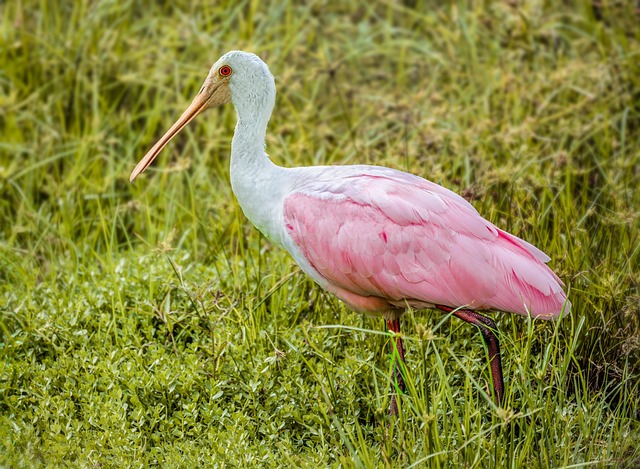
The Spoonbill is one of the world’s most distinctive wading birds, instantly recognized by its long, flat, spoon-shaped bill. Found in wetlands, marshes, rivers, lakes, and coastal lagoons across many parts of the world, spoonbills are elegant birds that use their uniquely shaped bills to sweep through shallow water in search of food. Their graceful movements, striking white or pink plumage (depending on the species), and fascinating feeding behavior make them a favorite among birdwatchers and wildlife photographers.
Spoonbills belong to the ibis family and play an important role in maintaining healthy wetland ecosystems by feeding on small aquatic animals. Their calm nature and synchronized feeding patterns make them a captivating sight in nature.
Fun Facts
- Spoonbills are named after their unique spoon-shaped bills, which widen at the tip.
- They feed by sweeping their bills side to side through shallow water until they detect prey.
- Spoonbills often feed in groups, moving together in a coordinated line.
- Their diet includes small fish, shrimp, insects, crabs, frogs, and aquatic invertebrates.
- The Roseate Spoonbill gets its bright pink color from pigments found in crustaceans, similar to flamingos.
- Most spoonbill species have white feathers, while some display beautiful pink plumage.
- Spoonbills are found on every continent except Antarctica.
- They usually build nests in trees, shrubs, or reed beds near water, often nesting in colonies with herons and ibises.
- Spoonbills rely more on touch than sight when hunting because they often feed in murky water.
- Many spoonbill populations migrate seasonally between breeding and wintering grounds.
Scientific Information
| Feature | Details |
| Common Name | Spoonbill |
| Scientific Family | Threskiornithidae |
| Order | Pelecaniformes |
| Class | Aves |
| Phylum | Chordata |
| Kingdom | Animalia |
| Average Length | 60–100 cm (24–39 inches), depending on species |
| Wingspan | 110–135 cm (43–53 inches) |
| Weight | 1–2 kg (2.2–4.4 lbs), varies by species |
| Habitat | Wetlands, marshes, estuaries, rivers, lakes, mangroves, and coastal lagoons |
| Diet | Carnivorous (fish, crustaceans, insects, frogs, mollusks, aquatic invertebrates) |
| Lifespan | Typically 10–20 years in the wild |
| Conservation Status | Varies by species; many are listed as Least Concern, while some have greater conservation needs |
Habits & Behavior
Spoonbills are social, peaceful birds that spend much of their day searching for food in shallow water. Their most remarkable behavior is their feeding technique: they walk slowly while sweeping their partially open bills from side to side. Sensitive nerve endings inside the bill allow them to instantly detect prey, causing the bill to snap shut in a fraction of a second.
These birds are highly adapted to wetland life and are often seen feeding alongside herons, egrets, and ibises. During the breeding season, spoonbills gather in large nesting colonies where both parents help build the nest, incubate the eggs, and care for the chicks.
Although generally quiet birds, spoonbills communicate through soft grunts, hisses, and bill-clattering, especially during courtship and nesting. Their broad wings allow for smooth, graceful flight, with the neck fully extended—unlike herons, which fly with their necks tucked in.
Spoonbills are most active during the early morning and late afternoon when feeding conditions are ideal. Outside the breeding season, they may gather in flocks that number from dozens to hundreds of birds, particularly in productive wetlands and estuaries.
Healthy wetlands are essential for spoonbill survival. Habitat loss, pollution, and wetland drainage remain significant threats in some regions, making wetland conservation important for maintaining stable spoonbill populations around the world.