Starling Bird: Beautiful Songs, Amazing Mimicry & Fascinating Facts
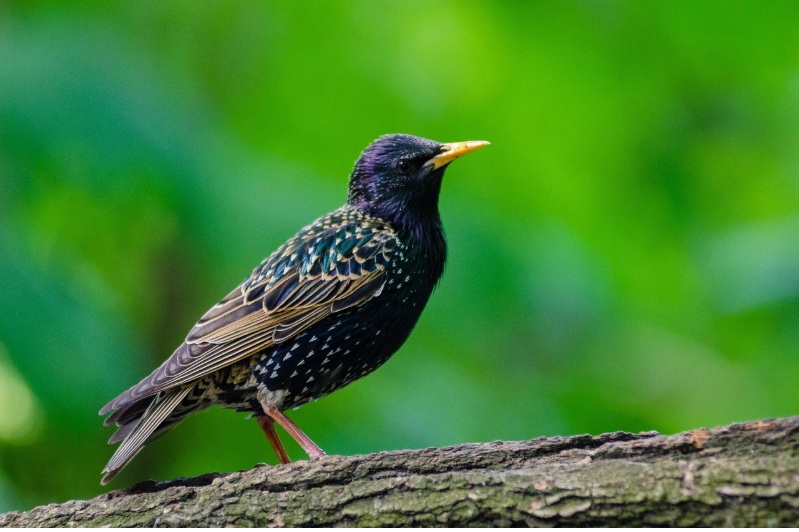
The Starling is one of the world’s most intelligent and adaptable birds, admired for its glossy feathers, energetic behavior, and remarkable ability to mimic sounds. Found across Europe, Asia, Africa, Australia, and North America, starlings thrive in a wide range of habitats, from forests and farmlands to busy cities and suburban gardens.
Their musical whistles, clicks, and chatter make them fascinating to watch and listen to. During the breeding season, many starlings display shimmering feathers with green and purple iridescence, creating a spectacular appearance in sunlight. They are also famous for forming enormous, synchronized flocks known as murmurations, one of nature’s most breathtaking aerial displays.
Fun Facts
- Starlings can imitate the songs of other birds and even mimic sounds like car alarms, mobile phone ringtones, and human speech.
- A flock of thousands of starlings flying together creates a mesmerizing display called a murmuration.
- Their feathers shimmer with beautiful green, purple, and blue iridescent colors when viewed in bright light.
- Starlings are highly social birds and usually feed, roost, and travel in large groups.
- They help control insect populations by eating beetles, caterpillars, grasshoppers, and other agricultural pests.
- Young starlings have dull brown feathers before developing their glossy adult plumage.
- They are excellent flyers, capable of making quick turns and coordinated movements while avoiding predators.
- Starlings are curious birds that quickly adapt to new environments, including urban areas.
Scientific Information
Common Name: Starling
Scientific Name: Sturnus vulgaris (European Starling)
Family: Sturnidae
Order: Passeriformes
Class: Aves
Diet: Omnivore (insects, worms, fruits, berries, seeds, nectar, and small invertebrates)
Average Length: 20–23 cm (8–9 inches)
Wingspan: 31–44 cm (12–17 inches)
Weight: 60–100 grams
Lifespan: Typically 2–5 years in the wild, though some individuals live over 15 years.
Habitat: Woodlands, grasslands, farmland, wetlands, parks, gardens, towns, and cities.
Distribution: Native to Europe and parts of Asia; introduced to North America, Australia, New Zealand, and South Africa.
Conservation Status: Least Concern (IUCN)
Habits & Behavior
Starlings are active, intelligent, and highly social birds. They spend much of the day searching for food on the ground, probing soil with their sharp bills to find insects and worms. Their varied diet allows them to survive in many different environments throughout the year.
These birds usually live in flocks, especially outside the breeding season. Before sunset, thousands of starlings may gather in spectacular murmurations, moving together in constantly changing shapes that help confuse predators such as hawks and falcons.
During the breeding season, males attract females by singing from tree branches or nest entrances. They often decorate nesting cavities with fresh green leaves and grasses. Starlings nest in tree holes, building cavities, nest boxes, and even gaps in buildings.
Starlings communicate through whistles, clicks, rattles, and impressive mimicry. Their ability to copy the sounds of other birds and environmental noises makes them one of the most talented vocal mimics among songbirds.
Thanks to their intelligence, adaptability, and strong social behavior, starlings have successfully colonized many parts of the world and remain one of the most recognizable bird species.