Teal – The Tiny Duck with a Remarkable Voice
The Teal is a small, lively duck known for its quick movements, beautiful plumage, and distinctive calls. Despite its modest size, the Teal is an impressive waterbird that can be found across wetlands, marshes, ponds, lakes, and coastal habitats.
The name “Teal” commonly refers to several small dabbling ducks, with the Eurasian Teal (Anas crecca) being one of the best-known species. During migration and winter, Teals often gather in flocks, creating a lively scene as they feed and communicate around shallow waters.
Teals are especially fascinating for bird enthusiasts because of their varied vocalizations. Their calls help them communicate with one another, particularly during social interactions and the breeding season.
Fun Facts
- Small but speedy: Teals are among the smaller dabbling ducks and are remarkably agile in flight.
- Wide-ranging travelers: Many Teals undertake seasonal migrations, traveling considerable distances between breeding and wintering grounds.
- Shallow-water specialists: They often feed in shallow wetlands where they can easily reach aquatic plants and small invertebrates.
- Social birds: Outside the breeding season, Teals commonly gather in flocks that may contain many individuals.
- Distinctive calls: Teals use a variety of vocalizations for communication, with males and females producing different sounds.
- Quick takeoff: Their relatively small size and compact bodies allow them to take off rapidly from the water.
- Dabbling ducks: Rather than diving deeply, Teals usually feed by tipping forward in shallow water.
Scientific Information
Common Name: Teal
Scientific Name: Anas crecca
Family: Anatidae
Order: Anseriformes
Class: Aves
The Eurasian Teal is a small dabbling duck belonging to the Anatidae family, which includes ducks, geese, and swans. It has a compact body, short neck, and relatively small bill.
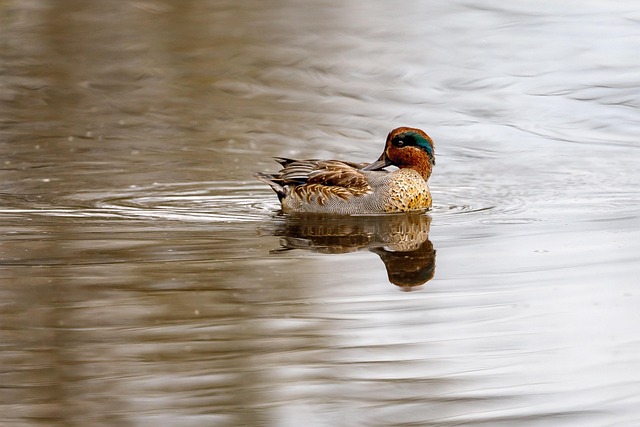
The male Eurasian Teal develops striking breeding plumage, including a chestnut-colored head with a distinctive green facial patch bordered by lighter markings. Females are generally mottled brown, providing excellent camouflage among vegetation.
Teals are adapted to aquatic environments and have specialized bills that allow them to filter and collect food from shallow water and mud.
Habits & Behavior
Teals are generally active and highly social birds. They spend much of their time on wetlands, ponds, marshes, flooded grasslands, and other shallow-water habitats.
Their diet can include seeds, aquatic plants, algae, small aquatic invertebrates, and other tiny organisms. They commonly feed by dabbling at the surface or tipping their bodies forward to reach food underwater.
During migration and winter, Teals may form large groups and can mix with other species of waterfowl. Their small size and rapid wingbeats give them a distinctive, fast appearance when flying.
During the breeding season, males display their colorful plumage and produce characteristic calls as part of courtship and communication. Females typically build nests concealed among vegetation close to water.
Teals are also alert birds. When disturbed, they can quickly take flight, often rising almost vertically from the water before accelerating away.
Small, agile, and full of character, the Teal is a wonderful example of how much life and beauty can be found in wetlands. Its attractive plumage, social behavior, seasonal movements, and distinctive sounds make it an interesting bird to observe and listen to.
Listen to the Teal sound and discover more fascinating bird and animal sounds at Bird Animal Sounds.