Turkey – A Watchful Bird of Forests and Fields
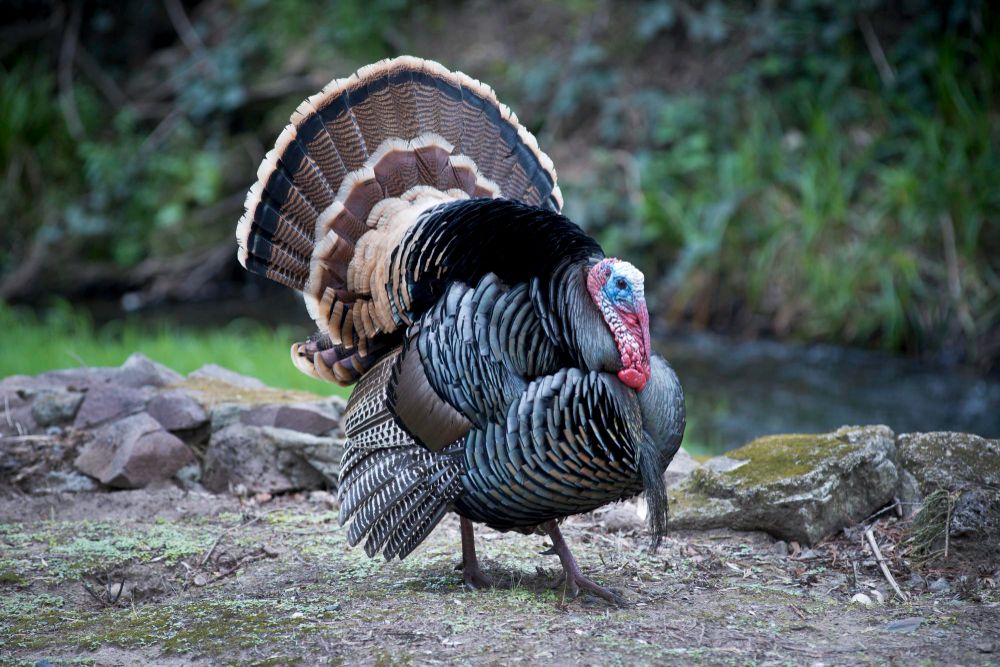
The turkey is a large and alert bird recognized for its strong legs, broad wings, and distinctive vocal sounds. Although commonly linked with farms, turkeys are naturally wild birds that thrive in forests, woodlands, and open fields. They are intelligent, cautious, and highly adaptable, using sharp eyesight and quick movement to stay safe from predators. Their ability to survive in diverse environments makes turkeys one of the most successful ground birds in nature.
Fun Facts About Turkey
• Turkeys can change the color of their head and neck depending on mood.
• They have excellent vision, seeing three times better than humans in daylight.
• Wild turkeys can fly short distances to escape danger or reach roosting trees.
• Young turkeys are called poults.
Scientific Information
• Kingdom: Animalia
• Phylum: Chordata
• Class: Aves
• Order: Galliformes
• Family: Phasianidae
• Genus: Meleagris
• Species: Meleagris gallopavo
Turkeys are omnivorous birds, meaning they eat both plant matter and small animals.
Habits & Behavior
Turkeys are day-active birds that spend most of their time walking on the ground in search of food. They usually live in groups, which helps them stay alert and safe. At night, turkeys fly up into trees to sleep, avoiding ground predators.
Male turkeys use body displays and loud calls during the breeding season to attract mates. Communication among turkeys involves soft clucks, sharp alarm calls, and deep gobbling sounds, each serving a different purpose within the group.