Warbler: The Tiny Melodic Wanderer of Forests and Gardens
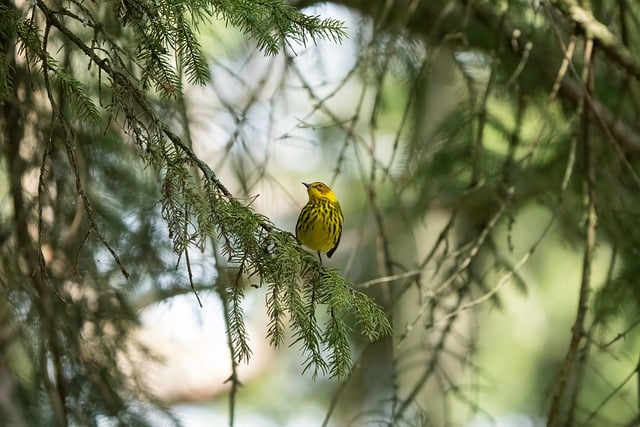
Warblers are small, lively songbirds known for their bright voices, quick movements, and delicate beauty. Found across Europe, Asia, Africa, and the Americas, warblers are one of the most diverse groups of birds in the world. Despite their small size, they are powerful singers, filling forests, wetlands, and gardens with energetic and musical calls. Warblers are often difficult to spot because they move quickly through foliage, but their songs reveal their presence in nearly every green habitat they occupy.
Fun Facts
- Warblers are among the smallest songbirds, yet they produce surprisingly loud and complex songs.
- Many species are highly migratory, traveling thousands of kilometers each year.
- Some warblers weigh less than 10 grams—lighter than a teaspoon of sugar.
- They are expert insect hunters, often catching prey mid-air or from leaves.
- Warblers are incredibly diverse, with over 100 species worldwide.
- Their colors vary from bright yellows and greens to subtle browns and grays.
- Many warblers sing both during the day and at dawn.
- Some species can mimic parts of other birds’ songs.
Scientific Information
Common Name: Warbler
Order: Passeriformes
Families: Multiple (including Parulidae, Phylloscopidae, Acrocephalidae, depending on region)
Class: Aves
Diet: Insectivorous (insects, larvae, spiders; occasionally nectar or fruit)
Average Length: 9–14 cm (3.5–5.5 inches)
Average Weight: 6–20 grams
Wingspan: 15–22 cm
Lifespan: 2–8 years (varies by species)
Habitat: Forests, wetlands, shrublands, grasslands, gardens, and reed beds
Distribution: Worldwide (except Antarctica)
Habits & Behavior
Warblers are highly active birds that spend most of their time flitting through trees, shrubs, and reeds in search of insects. Their constant movement and agility make them excellent hunters of small prey hidden among leaves and branches. They play an important role in controlling insect populations in natural ecosystems.
Most warblers are migratory, traveling between breeding and wintering grounds across continents. During breeding season, males sing persistently to establish territory and attract mates. Their songs vary widely between species and are often key identification features.
Warblers are generally solitary or found in pairs during breeding, but they may join mixed-species flocks outside the breeding season. They are highly adaptable and can thrive in both natural forests and human-modified landscapes like gardens and parks.
Their nests are usually small, hidden structures made of grass, leaves, and plant fibers, carefully concealed in dense vegetation to protect eggs and chicks from predators.
With their energetic behavior, impressive migrations, and beautiful songs, warblers are among the most fascinating and beloved songbirds in the world.