Weaver Bird: The Master Architect of the Avian World
The Weaver Bird is one of nature’s most remarkable builders, famous for creating intricate woven nests that showcase extraordinary craftsmanship. Found primarily across Africa, Asia, and parts of the Indian subcontinent, these small, social songbirds are known for their vibrant colors, energetic behavior, and engineering skills. Their hanging nests, carefully woven from grass and plant fibers, are among the most complex structures built by any bird. Whether seen darting through grasslands or busy constructing a new home, weaver birds never fail to impress bird enthusiasts and wildlife observers.
Fun Facts
- Weaver birds get their name from their ability to weave elaborate nests from grass and leaves.
- Some species can tie knots and weave materials with remarkable precision.
- Male weaver birds often build multiple nests to attract females.
- A female may inspect several nests before choosing a mate.
- Certain colonies contain hundreds of nests hanging from a single tree.
- Weaver birds are highly social and often live in large groups.
- Their nests are designed to protect eggs and chicks from predators and harsh weather.
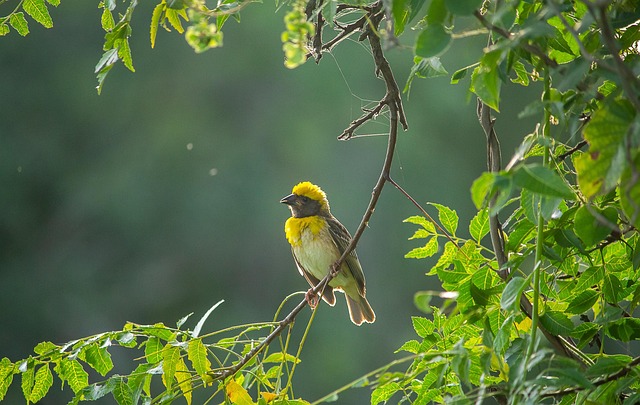
- Many male weavers develop bright yellow, orange, or red plumage during the breeding season.
Scientific Information
Common Name: Weaver Bird
Family: Ploceidae
Order: Passeriformes
Class: Aves
Diet: Omnivorous (seeds, grains, insects, nectar, and fruits)
Average Length: 10–24 cm (4–9 inches)
Average Weight: 15–60 grams
Wingspan: 15–30 cm
Lifespan: 5–15 years
Habitat: Grasslands, savannas, wetlands, farmlands, woodlands, and gardens
Distribution: Africa, Asia, and parts of the Indian subcontinent
Habits & Behavior
Weaver birds are highly active and social birds that spend much of their time foraging for seeds, insects, and other food sources. They are often seen moving in flocks and communicating through a variety of chirps and calls.
The most famous aspect of their behavior is nest construction. Male weaver birds gather strips of grass and plant fibers, weaving them into complex hanging nests. These nests may take several days to complete and are often suspended from tree branches over water or open spaces to reduce the risk of predation.
During the breeding season, males compete to attract females by displaying their colorful plumage and showcasing their nest-building skills. Females carefully inspect the nests and may reject poorly constructed ones. Once a nest is accepted, the pair uses it to raise their young.
Weaver birds are generally colonial nesters, with many pairs building nests in the same area. This social lifestyle provides added protection against predators and allows birds to benefit from group vigilance.
Their intelligence, architectural talent, and social behavior make weaver birds some of the most fascinating and admired songbirds in the natural world. Their beautifully woven nests remain one of the greatest examples of animal engineering.