White Stork – The Elegant Traveler of Skies
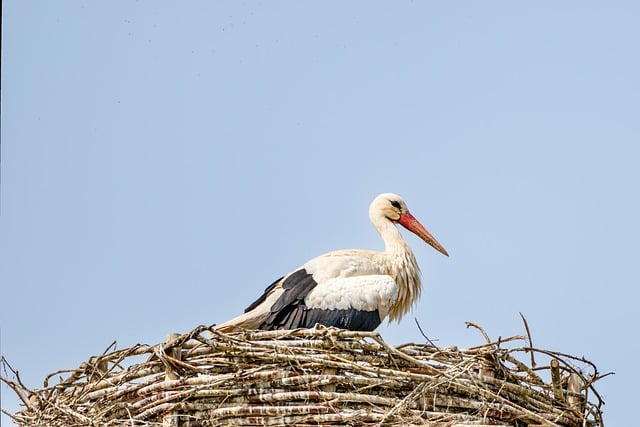
The White Stork is one of the most recognizable and beloved birds in Europe, Asia, and parts of Africa. Known for its striking white plumage, contrasting black wings, long red legs, and pointed red bill, this graceful bird is often seen soaring high in the sky or standing majestically in open fields and wetlands.
For centuries, the White Stork has been surrounded by folklore and cultural symbolism. In many European traditions, it is believed to bring good luck, prosperity, and even newborn babies, making it a cherished bird in local cultures. With its impressive migratory journeys and strong connection with human settlements, the White Stork has become a symbol of harmony between nature and people.
Fun Facts
- The White Stork is famous in European folklore as the bird that delivers babies to families.
- Unlike many birds, storks do not sing; instead, they communicate by clattering their bills together.
- These birds are powerful migrators and can travel over 10,000 km (6,200 miles) between Europe and Africa.
- White Storks often build large nests on rooftops, chimneys, and poles, sometimes using the same nest for many years.
- They use thermal air currents to soar effortlessly during long migrations.
- The White Stork is the national bird of Lithuania and Poland, where it is highly respected and protected.
Scientific Information
- Scientific Name: Ciconia ciconia
- Family: Ciconiidae
- Order: Ciconiiformes
- Average Length: 100–115 cm (39–45 inches)
- Wingspan: 155–215 cm (5–7 feet)
- Weight: 2.3–4.5 kg
- Diet: Insects, frogs, small fish, reptiles, rodents, and earthworms
- Habitat: Wetlands, meadows, grasslands, farmlands, and open countryside
Habits & Behavior
White Storks are large, social birds that often live close to human settlements. They are well known for building huge stick nests on tall structures such as trees, rooftops, church towers, and specially built nesting platforms. These nests can become extremely large over time because the birds reuse and add to them every year.
During migration, White Storks travel in large flocks, gliding and soaring on warm air currents to conserve energy. They avoid flying over large bodies of water because they rely on thermal air currents that form over land.
These birds are patient hunters, often walking slowly through fields or wetlands while searching for prey. Their long legs and sharp bill help them catch small animals quickly.
White Storks are also known for their strong pair bonds, with many pairs returning to the same nesting site year after year. Their presence is often welcomed by local communities, as they help control insect and rodent populations while adding beauty to the natural landscape.