
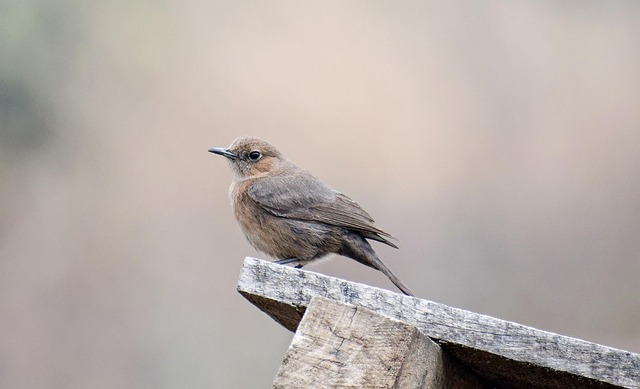
Wren — The Tiny Bird with a Giant Voice
The Wren is a tiny, energetic songbird famous for its surprisingly loud and powerful voice. Despite its small size, the wren is one of the most vocal birds in many of the habitats where it lives. With its compact body, upright tail, and quick movements, it is often seen hopping through bushes, hedges, gardens, woodlands, and dense vegetation in search of food.
Wrens are generally small brown birds with subtle markings that help them blend into their surroundings. Their camouflage and habit of moving quickly through dense vegetation can make them difficult to spot, but their distinctive songs often reveal their presence before they are seen.
The name “wren” is used for a group of small birds in the family Troglodytidae, although the word is also used for some unrelated birds in other parts of the world. The House Wren (Troglodytes aedon) is one of the most widespread members of the wren family in the Americas.
Wrens are insectivorous birds and spend much of their time searching for insects, spiders, larvae, and other small invertebrates. Their lively behavior, beautiful songs, and ability to thrive around human settlements make them fascinating birds to observe and listen to.
Fun Facts
- Tiny bird, huge voice: Wrens can produce remarkably loud and complex songs for their small body size.
- Very small: Many wrens are only around 9–12 cm (3.5–4.7 inches) long, depending on the species.
- Tail held upright: Wrens are often recognized by their short, frequently cocked tails.
- Insect hunters: They eat a wide variety of insects, spiders, caterpillars, and other tiny creatures.
- Garden visitors: Several wren species readily use gardens, parks, and areas around homes.
- Territorial singers: Male wrens commonly use their songs to establish and defend territories.
- Creative nesters: Wrens may build nests in cavities, nest boxes, tree holes, crevices, and even unusual sheltered locations.
- Always on the move: Their rapid hopping and active searching behavior makes them exciting birds to watch.
- Masters of camouflage: Their brownish plumage helps them disappear among leaves, branches, and undergrowth.
Scientific Information
Common Name: Wren
Family: Troglodytidae
Order: Passeriformes
Class: Aves
Phylum: Chordata
Kingdom: Animalia
The family Troglodytidae contains numerous species of small passerine birds, most of which occur in the Americas. One of the best-known species is the House Wren (Troglodytes aedon).
Wrens typically have compact bodies, short rounded wings, relatively short tails, and thin, slightly curved bills. Their plumage is generally dominated by shades of brown, gray, and buff, often with subtle barring on the wings and tail.
Their small size and powerful flight muscles allow them to move quickly through dense vegetation. Their legs and feet are well suited for hopping and climbing around branches, shrubs, and other vegetation while searching for prey.
Habits & Behavior
Singing & Communication
Wrens are renowned for their energetic songs. Their vocalizations can include rapid sequences of whistles, trills, and musical notes. Songs are particularly important during the breeding season, when they are used to attract mates and defend territories.
Feeding Behavior
Wrens primarily search for food close to the ground and within dense vegetation. They investigate leaves, bark, branches, and crevices for insects and spiders. Their diet can include beetles, caterpillars, ants, grasshoppers, insect larvae, and other small invertebrates.
Nesting
Many wrens are cavity nesters. Depending on the species, they may use natural tree holes, abandoned cavities, nest boxes, cracks, or other sheltered spaces. Some species may construct several nest structures or partially built nests, although only one is ultimately used for breeding.
Habitat
Wrens can occupy a wide range of environments, including forests, woodland edges, shrublands, grasslands, gardens, farms, parks, and residential areas. Dense vegetation is particularly valuable because it provides food, shelter, and nesting opportunities.
Breeding
During the breeding season, males often become highly territorial and sing frequently. The female typically lays a clutch of eggs in a carefully sheltered nest, and both parents may participate in feeding the young depending on the species.
Social Behavior
Outside the breeding season, some wren species may become less territorial and can occasionally be observed near other birds. However, many remain active, alert, and highly protective of their preferred feeding and nesting areas.
Listen to the Wren’s Beautiful Sound
The wren may be tiny, but its voice is anything but small. Its rapid, cheerful song is one of the most memorable sounds of woodland edges, gardens, and shrub-filled habitats.
Listen to the beautiful sound of the Wren and enjoy one of nature’s most remarkable little songsters.