Yellowthroat: The Masked Songbird of Wetlands & Wild Meadows
The Yellowthroat is a small, lively songbird best known for its bright yellow throat and distinctive dark facial mask. Often found moving through dense vegetation, wetlands, marshes, grasslands, and overgrown fields, this charming bird can be surprisingly difficult to spot despite its energetic calls.
The name “Yellowthroat” can refer to several closely related species, but the Common Yellowthroat is the best-known member of this group, especially in North America. It is a member of the New World warbler family and is famous for its cheerful songs and secretive behavior.
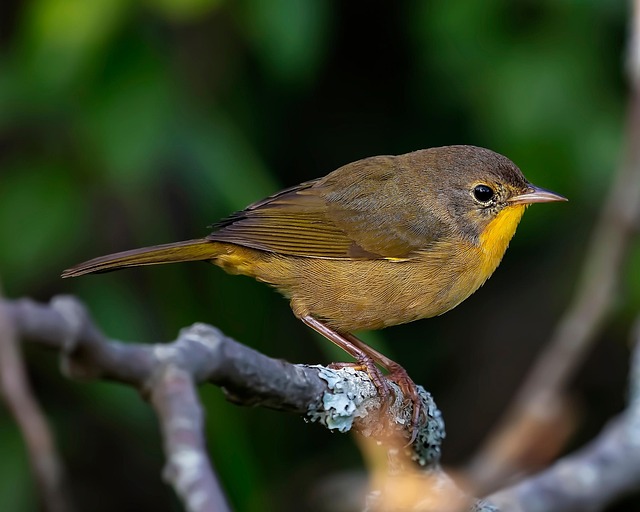
With its olive-brown back, yellow underparts, and—especially in males—a striking black mask bordered by white, the Yellowthroat is a beautiful example of how small birds can have distinctive personalities and appearances.
Its familiar call often rings out from thick vegetation, making it easier to hear than to see. Listen carefully, and you may hear a Yellowthroat announcing its presence from somewhere hidden among grasses or shrubs!
Fun Facts
- A Natural Mask: Male Common Yellowthroats have a distinctive black mask across the face, giving them a mysterious appearance.
- Bright Yellow Throat: Their vivid yellow throat and breast make them easy to recognize once they emerge from dense vegetation.
- Master of Hiding: Yellowthroats often stay low in thick vegetation rather than sitting prominently on exposed branches.
- Easy to Hear: Their characteristic song is often heard before the bird itself is seen.
- Insect Hunter: Insects and other small invertebrates make up a major part of their diet.
- Small but Active: Despite their tiny size, Yellowthroats are energetic birds that constantly search through vegetation for food.
- Habitat Flexibility: They can live in wetlands, marshes, fields, brushy areas, and other habitats with plenty of dense cover.
- Long-Distance Travelers: Many populations migrate seasonally, traveling considerable distances between breeding and wintering areas.
- Different Appearance: Females generally lack the bold black facial mask seen in males and have a more subdued appearance.
- Distinctive Song: The male’s song is often described as a simple, repeated series of notes that carries surprisingly well through vegetation.
Scientific Information
Common Name: Yellowthroat / Common Yellowthroat
Scientific Name: Geothlypis trichas
Family: Parulidae
Order: Passeriformes
Class: Aves
Type: Songbird / New World Warbler
The Common Yellowthroat is a small New World warbler belonging to the family Parulidae. It is widely distributed across North America and occurs in a variety of habitats where dense vegetation provides food, nesting sites, and protection.
Adults are generally around 11–14 cm (4.3–5.5 inches) long. Males are particularly recognizable because of their olive-colored upperparts, yellow throat and breast, and contrasting black mask. Females are usually less brightly colored and lack the prominent mask.
Yellowthroats primarily feed on insects and other small invertebrates. Their slender bills are well suited for picking small prey from leaves, stems, and other vegetation.
During the breeding season, males frequently sing to establish territories and attract mates. Their songs are an important part of the species’ communication system.
Habits & Behavior
Singing & Communication
The male Yellowthroat is a persistent singer during the breeding season. Its simple but recognizable song is frequently delivered from within or near dense vegetation.
Songs help males defend territories and attract females. Yellowthroats also use various calls to communicate with mates, offspring, and neighboring birds.
Feeding Behavior
Yellowthroats are active insect hunters. They move through grasses, shrubs, reeds, and other vegetation while searching for small insects and invertebrates.
They may glean prey directly from leaves and stems, occasionally making short flights to capture insects.
Habitat Preferences
Yellowthroats particularly enjoy habitats containing thick, low vegetation. Typical habitats include:
- Marshes
- Wet meadows
- Swamps
- Grasslands
- Shrublands
- Reed beds
- Overgrown fields
- Stream edges
- Wetland borders
Dense vegetation provides both food and protection from predators.
Breeding Behavior
During breeding season, males establish territories and sing frequently. The female usually builds a small cup-shaped nest hidden among grasses or low vegetation.
The nest’s concealed location helps protect eggs and young from predators. After hatching, both parents participate in caring for the chicks.
Migration
Many Common Yellowthroats are migratory. Birds breeding in northern parts of their range generally move southward during the colder months, while some populations in warmer regions may remain in the same general area year-round.
Migration allows these birds to take advantage of seasonal food availability and suitable breeding conditions.
Staying Safe
Because Yellowthroats are small birds that frequently live close to the ground, staying hidden is an important survival strategy. They often move quietly through vegetation and quickly disappear into cover when threatened.
Their preference for dense vegetation provides protection from aerial and ground predators.
Listen to the Yellowthroat Sound
The Yellowthroat’s distinctive song is one of the best ways to locate this secretive little bird. Because it often remains hidden in dense vegetation, listening carefully can reveal a Yellowthroat even when you cannot see it.
Listen to the Yellowthroat sound and enjoy one of nature’s charming little songbirds!