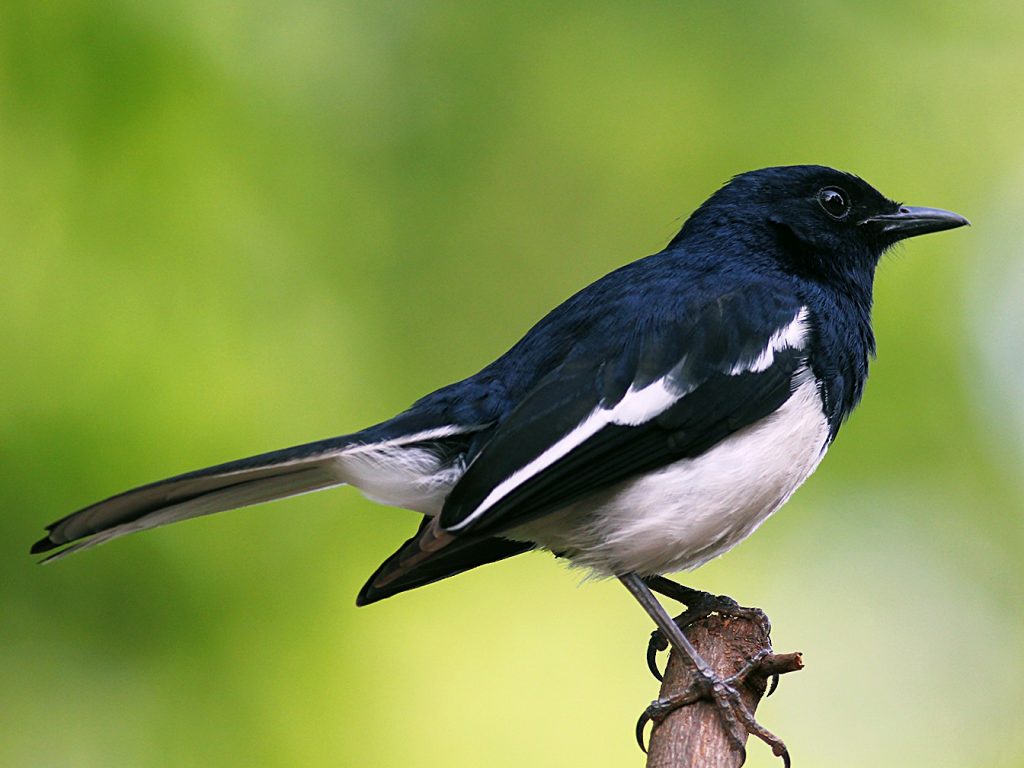
The Oriental Magpie Robin (Copsychus saularis) is a delightful songbird commonly seen across South and Southeast Asia. Famous for its beautiful singing and elegant black-and-white feathers, this bird is deeply loved by nature enthusiasts. In Bangladesh, it holds special importance as the national bird, symbolizing the country’s rich wildlife and natural beauty.
This bird is small and slender, usually growing between 19 and 21 centimeters long. It has a long tail and an upright stance that makes it easy to recognize. Male and female birds look slightly different. Males have glossy black feathers on the head and upper body, paired with a bright white belly and wing markings. Females are softer in color, showing shades of greyish-brown, yet they still display the characteristic white wing patch. Their constant tail movements and alert posture give them an energetic and confident appearance.
What truly sets the Oriental Magpie Robin apart is its voice. Its clear and musical songs are often heard at dawn, filling gardens and forests with melody. Male birds sing most actively during the breeding season, using their voice to attract females and protect their territory. Their songs range from gentle tunes to complex patterns filled with whistles and trills. Some individuals can even imitate sounds from other birds and their surroundings, making each song unique.
In daily life, these birds are lively and watchful. They are often seen hopping on the ground in parks, village areas, forests, and open fields. Their diet mainly consists of insects, worms, and other small creatures, though they sometimes eat fruits or seeds. With sharp vision and quick reflexes, they catch prey efficiently, showing impressive hunting skills for such a small bird.
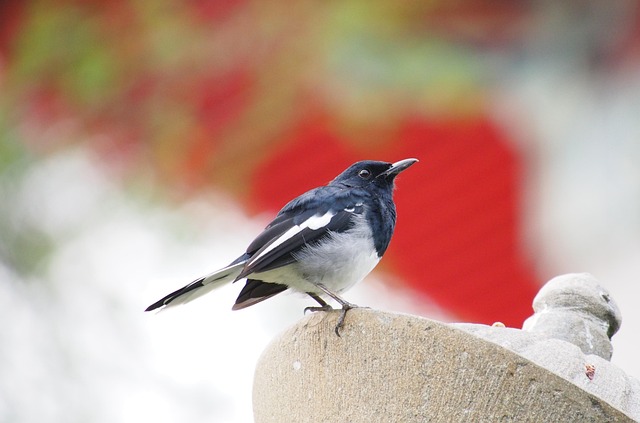
The breeding period usually takes place from March to July. During this time, males sing frequently to attract a partner. Nests are built in tree holes, wall gaps, or unused structures, using natural materials like grass, leaves, and twigs. The female lays around three to five eggs and spends most of the time incubating them. Meanwhile, the male stays nearby to guard the nest and provide food. After the chicks hatch, both parents share the responsibility of feeding and protecting them until they can fly on their own.
Although the Oriental Magpie Robin is still commonly seen, it faces threats in some areas. Urban expansion, cutting down trees, pollution, and illegal bird trading reduce their natural habitats. In cities, suitable nesting spots are becoming scarce. Protecting green spaces, installing nesting boxes, and raising awareness about bird conservation can greatly help these birds survive and flourish.
To sum up, the Oriental Magpie Robin is not just a beautiful bird—it represents melody, grace, and balance in nature. Its charming songs, striking look, and active nature make it a joy to observe. By caring for their environment and stopping harmful practices, we can ensure that future generations continue to enjoy the presence and music of this remarkable songbird.