
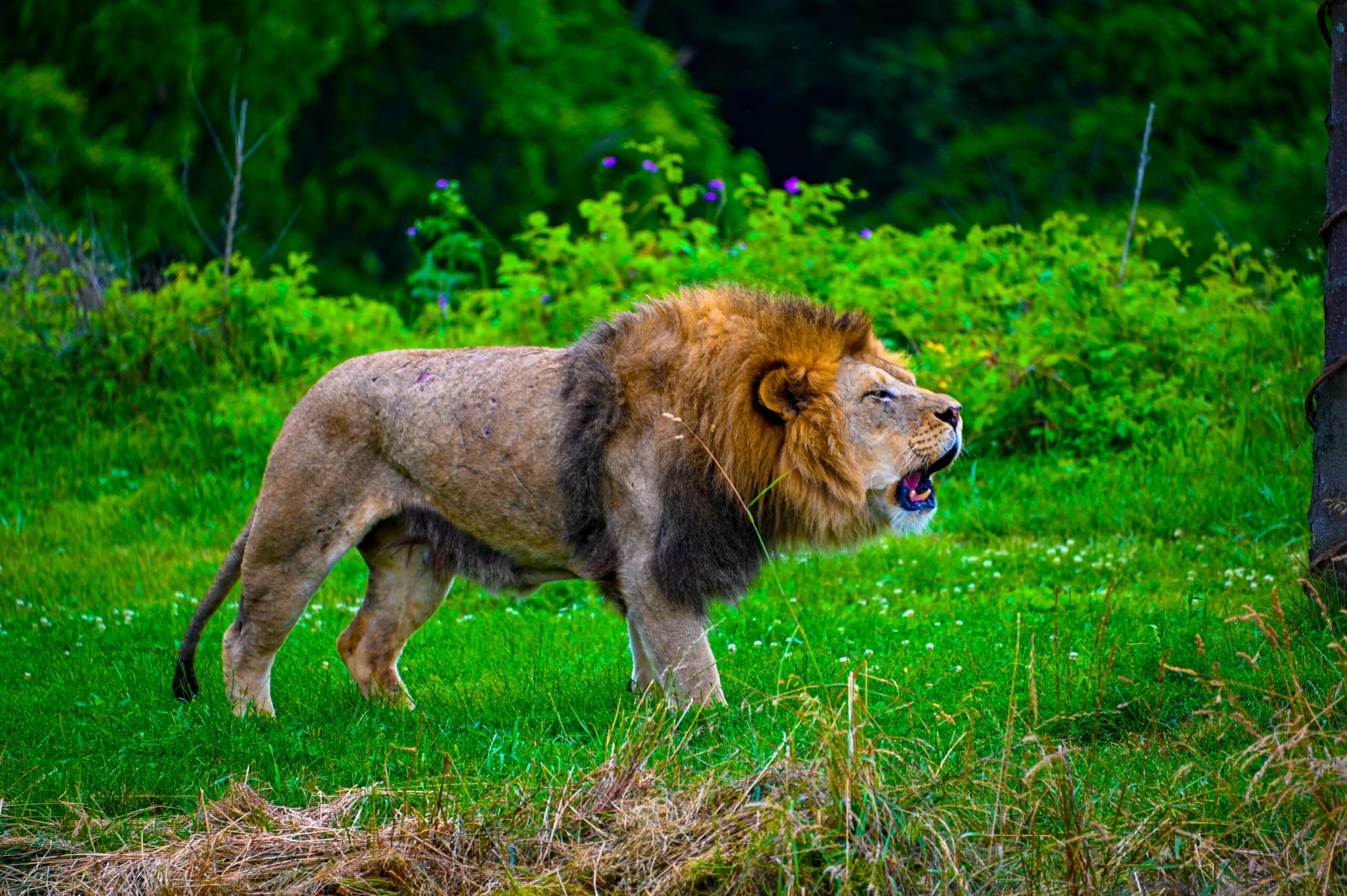
The lion, commonly called the “King of the Jungle,” is among the most impressive and majestic animals on Earth. Known for its strength, courage, and majestic appearance, the lion has long symbolized power and leadership across various cultures. Predominantly found in Africa, with a smaller population in India’s Gir Forest, lions are apex predators that play a vital role in maintaining ecological balance. This article delves into the lion’s features, behavior, social life, and the reasons behind humanity’s admiration for this iconic big cat.
Lions are members of the species *Panthera leo* and belong to the family of big cats. Male lions are easily recognized by their impressive manes, which can vary from golden to dark brown or even black. These manes not only give males a commanding presence but also provide protection during fights. Female lions, known as lionesses, lack manes and are slightly smaller in size, but they take the lead in hunting for the pride. Lions possess muscular bodies, sharp claws, and strong jaws, making them highly efficient predators.
One of the most fascinating aspects of lions is their social nature. Unlike most big cats, which are solitary, lions live in social groups called prides, typically consisting of related females, their offspring, and a few males. This group structure allows lions to hunt together, defend their territory, and care for their young. Lionesses often cooperate to stalk and catch prey, showcasing teamwork and strategy, while males guard the pride from rivals and potential threats.
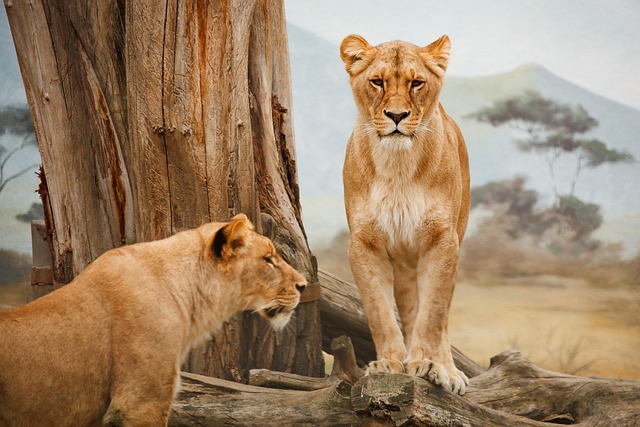
Lions are carnivorous hunters, preying on animals such as zebras, antelopes, wildebeests, and occasionally smaller predators. Their hunting success depends on stealth, coordination, and sudden bursts of speed. Despite their fierce reputation, lions spend a significant portion of their day resting—sometimes up to 20 hours—to conserve energy for hunting. Much of their time is also devoted to bonding and social interactions within the pride.
Communication plays a key role in lion society. Lions communicate through a mix of roars, growls, grunts, and physical gestures. A male lion’s roar can carry up to five miles, signaling territory boundaries and warning intruders. Cubs communicate with soft mews, purrs, and playful gestures, strengthening family bonds and learning social cues.
Lions appear in myths, folklore, and art as symbols of bravery, authority, and protection. Many nations feature lions in their coats of arms, flags, and emblems. Beyond their fearsome image, lions are admired for their grace, beauty, and strong familial ties.
However, lions face serious threats, including habitat loss, human-wildlife conflict, and poaching, which have led to declining populations. Conservation programs, protected areas, and awareness campaigns are essential to ensure that these magnificent creatures continue to thrive in the wild for future generations.
In summary, lions are not just formidable predators—they are symbols of strength, courage, and social unity. Observing them in their natural environment highlights the complexity and grandeur of wildlife. Protecting lions is crucial for preserving an essential part of the planet’s natural heritage.